I’ve tried and tried so many times to start this blog off in a profound way that sounds educated and well thought out. Try as I may, I just can’t manage to do it. Why? Because every time, I end up seeing red and all my sage wisdom goes right out the window. I like to think that while I’m passionate about what I have to say with regards to PPMD, I’m usually pretty level-headed. But let me tell you, something happened this past week that made me so angry that I’m having a hard time staying cool, calm, and collected, much less putting my thoughts together in a manner that is readable without going “Huh?” or “Whoa, that’s a new cuss word” or maybe some combination of both.
I’m all for counseling. I’m all for finding and promoting alternative methods of dealing with PostPartum Depression. I love to read about the things other people do to help themselves or others. I love it when I see someone who has come up with a new and innovative way to provide education and support to people who are battling or have battled PPMD. People like Lauren Hale and #PPDChat, Katherine Stone at PostPartum Progress, and Yael Saar and her PPD SpeakEasy Phone Chats. Because, well, medication and therapy are all well and good, and are highly beneficial to many many people struggling with PPMD, but sometimes you need the support of a community that has been there, is there right now. I think it’s well beyond awesome that people come up with such fantastic ways to pull together and find a sense of community to be able to better support each other, educate others, and combat the stigma that comes with mental health in general and PPMD specifically
What I do not love is people who talk out of their ass. People who tout themselves as having a way to help when they don’t. People who throw something together without doing the research to know what it is they’re dealing with. And when you charge money for it? Ten times worse. How can you help someone when you don’t even know what it is they’re dealing with? Last week, I ran across one such person and I have been angry ever since. The offending person: Sheryl Paul of Conscious-Transitions.com. From the about me portion of her website:

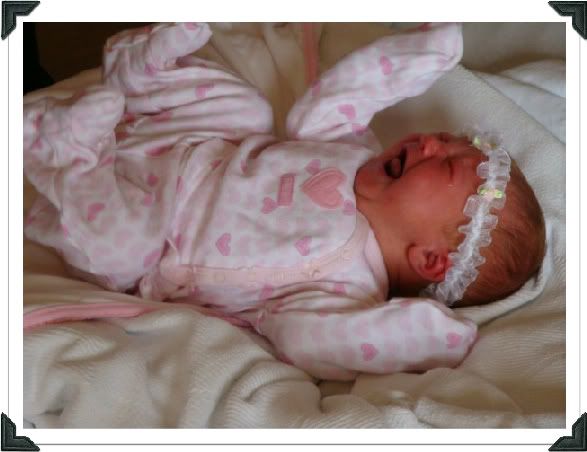
This picture was taken when we were getting Elizabeth ready to go home from the hospital after she was born. She was madder than a wet hen that we had the audacity to change her diaper and *gasp* make her wear CLOTHES! She screamed, hollered, scrunched up, kicked, waved her adorable little fists, cried real tears, and generally made a ruckus. She was very angry. That's about how I feel.
Moving on to discussion of what Ms. Paul posted, there are multiple problems with her logic. Let's just look at the ones that jumped out most immediately to me.
1. Not everyone who experiences PPD feels that sense of “loss” and “grief”. Not everyone deals with all that stuff she outlined during pregnancy. One of the things about PPD is that there are no boxes that it fits into. Everyone struggling with PPD has their own story and to try to force us all into the same mold is insulting. Dealing with PPD doesn’t take away individuality, the experiences are as vast and myriad as the stars in the night sky. Some women will experience every single symptom listed in any book, some may only experience one symptom. Some may not sleep at all, some may sleep all the time. Some may not feel any emotions, may feel totally numb, and some may feel so many emotions they go into overload. I personally had a combination of the two. I had no idea it was possible to feel so many emotions and yet, at the same time, feel so emotionless. I don’t recall, though, that I felt a sense of loss or grief. Sad? Yes. Grief? Not so much.
2. Doctors don’t usually prescribe anxiety medication at the drop of a hat like she describes and if one does, they need to be reported for their irresponsibility. My experience has been that it’s actually difficult to get the help, diagnosis, and medication that you need.
3. “Exploring your hidden thoughts” can be DANGEROUS. If I had “explored my hidden thoughts” instead of seeking help, I would be dead right now. Not joking. I’d have a headstone at a cemetery instead of Facebook, Twitter, and a blog. When you’re depressed and having thoughts of harming yourself and/or others, those thoughts should ONLY be explored under he guidance and supervision of a licensed medical/mental health professional.
4. PostPartum Depression is not the result of faulty thought processes, lack of studying, or not taking a 200.00 course from a Bridal Counselor. PostPartum Depression is a very real mental health illness that is caused by physical factors. Hormone imbalances, thyroid problems, etc. A medical professional can explain it better than I. But I do know that it’s not something you can avoid just by changing how you think or reading a book or watching a video.
Sheryl Paul is essentially saying that those of us who have or are dealing with this are doing so out of some failure of our own. The message she is sending out is that it’s our fault. Oh, but good news, you can fix it by paying money to take her course! She is invalidating the feelings and experiences of all of us who have, are, or will deal with PPD. She is saying that she knows better than a doctor. She is setting us back when we have worked so hard to educate ourselves and others. She is furthering the stigma that we work so hard every day to combat. Her claims are audacious, faulty, irresponsible, and infuriating. She has the potential to cause a lot of harm if women see this and decide not to seek medical treatment that they need, or decide to explore their thoughts and end up killing themselves.
I don’t really know what else to say. I guess what it really boils down to is this: If you want to help people who are struggling with PPMD, do some research first. Make sure you know what you’re talking about before you start talking about it. If you are looking into a program like this that claims to help but is not affiliated with medical professionals, talk to a doctor first. The best way that I can think of to help is to educate yourself and to support someone you know who is dealing with PPMD. Make sure that anyone you know who is pregnant (and their family) is aware of the signs, symptoms, and risk factors for PostPartum Mood Disorders. Keep an eye on them and if you start to be concerned, talk to them. If they’re unwilling to listen, MAKE them get help. Believe me, it’s on harder the longer you wait. Be willing to speak up and speak out when you hear people say ignorant things like “PPD can be prevented by changing how you think” or “Just pray more” or “Are you sure you’re right with God?”. Know what some good resources are about PPMD so that when you hear about things like Sheryl Paul's program, you can say “You know, why don’t you check into this instead?”. Educate yourself, educate others. Love yourself. Love others enough to tell them when you see them struggling and they don’t realize it or don’t want to admit it.
I'm not sure how to close out this particular post other than to say "Thank you" for reading through my rantings. If you're looking for resources that are more helpful and educational than Sheryl Paul, the blogs I have listed here are a GREAT place to start. They have a ton of good information and links. Maybe some good can come from this whole fiasco. I only pray that disastrous bad does NOT come about.
I’m all for counseling. I’m all for finding and promoting alternative methods of dealing with PostPartum Depression. I love to read about the things other people do to help themselves or others. I love it when I see someone who has come up with a new and innovative way to provide education and support to people who are battling or have battled PPMD. People like Lauren Hale and #PPDChat, Katherine Stone at PostPartum Progress, and Yael Saar and her PPD SpeakEasy Phone Chats. Because, well, medication and therapy are all well and good, and are highly beneficial to many many people struggling with PPMD, but sometimes you need the support of a community that has been there, is there right now. I think it’s well beyond awesome that people come up with such fantastic ways to pull together and find a sense of community to be able to better support each other, educate others, and combat the stigma that comes with mental health in general and PPMD specifically
What I do not love is people who talk out of their ass. People who tout themselves as having a way to help when they don’t. People who throw something together without doing the research to know what it is they’re dealing with. And when you charge money for it? Ten times worse. How can you help someone when you don’t even know what it is they’re dealing with? Last week, I ran across one such person and I have been angry ever since. The offending person: Sheryl Paul of Conscious-Transitions.com. From the about me portion of her website:
Sheryl Paul, M.A., pioneered the field of bridal counseling in 1998. She has since counseled thousands of people worldwide through her private practice, her bestselling books, “The Conscious Bride” and “The Conscious Bride’s Wedding Planner,” and her websites. She’s regarded as the international expert on the wedding transition and has appeared several times on “The Oprah Winfrey Show”, as well as on “Good Morning America” and other top television, radio, and newspapers around the globe. Phone and Skype sessions available internationally.Awesome! I’m sure she’s helped a lot of people. Getting married is a HUGE transition and if talking to a Bridal Counselor helps, go for it! It sounds like she’s done a lot of research and really knows her stuff… when it comes to “Bridal Counseling”. The problem is, she’s set up a new program called “Birthing a new mother” and from reading what she has to say, it’s evident that she is NOT well educated in PPD and really doesn’t know how it works. Why, you may wonder? On her websites, she says (among other things):
"This completely unique program is the only one available that will help you manage your fertility anxiety, calm your pregnancy fears, and prevent postpartum depression. With the bonuses and the support, it’s worth over $1000, but I don’t want price to stand in the way of you having this information, so I’m offering it to you today for only $197."How generous... She also says:
"Would you enter any new job without preparing? You studied before taking your driver’s license test. You may have taken a premarital class. But we offer nothing for impending mothers and fathers on how to prepare for the biggest transition and most important job of their life!This hot mess first came to my attention when PostPartum Progress (on their Facebook page) posted a link to a blog Sheryl Paul had written on mariashriver.com. The blog was pulled after 48 hours due to a great deal of outcry (rightly so) but not before I had a chance to save it to my website. Allow me to post the full text of this lovely little gem so you can see what it is that originally sparked my indignation.
Until now… In this program I will tell you exactly how to prepare. I will gather a group of experts around you and together we will guide you through the inner work that needs to be done and the questions that need to be asked so that you are ready to absorb the shock of your new life and experience the joy and ease of motherhood that is your birthright. And if you follow this roadmap – which isn’t hard to do and takes just 10-15 minutes a day – you will prevent postpartum depression! You will feel empowered as a new mother! And you will be giving your baby the best possible beginning for emotional health.”
Three Tips for Navigating New MotherhoodBy Sheryl PaulThe dominant message in our culture during the preconception through early motherhood stages is that any signs of anxiety or depression indicate that something is “wrong” and needs to be fixed. This message sets women up for unrealistic expectations, which lay the foundation that entrench normal anxiety and depression into clinical levels.
What does it mean to have “normal” anxiety or depression during pregnancy or the postpartum stage? It means that every life change, no matter how positive and life-affirming, is accompanied by loss, fear, and doubt.
Let’s break this down: You’re pregnant. You’ve wanted to be pregnant since you were four years old. But as soon as the pregnancy test revealed a positive result, you heard a door slam shut and felt a pang of loss. You pushed it aside because you thought that’s not what you’re supposed to be feeling at that moment.
You feel fear arise during your first trimester. You’re scared you’re going to lose your baby. You feel scared again during your third trimester and wonder, “What if I won’t be a good mother?” Because you don’t understand how vitally important it is to acknowledge and express these losses and fears, you push them aside and instead focus on buying the right car seat. But the feelings don’t go away. Instead they mutate into anxiety, and your doctor suggests an anti-anxiety medication.
Or you’ve just had your baby and everyone is healthy and thriving. While you’re deeply in love with your magical child, you also feel a profound sense of loss and longing for the familiarity of your old lifestyle and identity. You prepared for childbirth and you took classes on breastfeeding and baby care, but no one prepared you for the normal and necessary sense of loss that most women feel on the other side of the birth threshold.
You wonder what’s wrong with you. You wonder if this means that you’re not cut out to be a mother. Nothing could be further from the truth, but because you’re not educated about what’s normal, you form false assumptions, which then prevent you from grieving the losses and allowing them to move through you to completion. Thus begins the slippery slope to postpartum depression.
Here’s the good news: Pregnancy anxiety and postpartum depression are avoidable and preventable! They both result from normal thoughts and feelings that are pushed underground because we don’t realize that they’re normal, where they then grow into an unmanageable state.
Here are three tips that I've learned for having an emotionally healthy pregnancy and avoiding postpartum depression:1. Educate yourself with the truth about what’s normal to feel during pregnancy and early motherhood. Most pregnancy guides pay scant attention to what’s happening emotionally for women and instead focus on the growth of the baby and your body. While this is important information, it won’t facilitate the birth of an emotionally healthy new mother. Here’s what you need to know in a nutshell: it’s normal to feel fear, grief, loss, confusion, ambivalence, uncertainty, terror, and doubt during every stage of this transition (as well as joy and excitement, of course!).2. Find a safe and compassionate place to express the difficult feelings. This may be with your partner, a friend, a therapist, or in the privacy of your journal. Your feelings are real and need to move out of your body. Most people hold the erroneous belief that so-called “negative” feelings will hurt your growing or newborn baby. The truth is that when you try to stifle these feelings, they’re amplified and that’s when they can harm your little one. So let them out!3. Find the courage to explore the hidden thoughts that are lurking in your pregnant or new mom mind. Just as the feelings need a place to land, the thoughts also need to be explored and fleshed out. This may be the first time in your life that you learn to work with your anxious or fear-based thoughts effectively, and there is no practice more worthy of your time! Whatever you learn now will serve you for the rest of your life as a mom, and as a human being.
Taking these three simple steps can be the deciding factor that determines whether your normal fear and loss descend into anxiety and depression or transform into serenity and an empowered transition into motherhood.
Sheryl Paul, M.A., is regarded as an international expert in transitions. Since 1998, she has counseled thousands of people worldwide through life transitions via her private practice, her bestselling books, her website, http://conscious-transitions.com, and her home study program, Birthing a New Mother: A Roadmap from Preconception through the First Year to Calm Your Anxiety, Fortify Your Marriage, and Prevent Postpartum Depression, which can be found at http://birthinganewmother.com. She lives in Boulder, Colorado with her husband and two sons."I read that and I got so incredibly angry. I get angry again every time I read it, every time I go to her website to pull the quotes I wanted to include in this blog. I just... no. Argh! It's bad enough to feel invalidated, but when the thoughts, feelings, and experiences being invalidated are those of a traumatic time/event? Fifty times worse. I can't even put into words exactly how this all makes me feel. It's pretty rare that that happens, too, I don't usually have difficulty expressing my feelings and emotions. But this? This reduces me to primal instincts of anger, frustration, and generally wanting to throw things at the wall. I think this picture best expresses how this whole thing makes me feel.
Moving on to discussion of what Ms. Paul posted, there are multiple problems with her logic. Let's just look at the ones that jumped out most immediately to me.
1. Not everyone who experiences PPD feels that sense of “loss” and “grief”. Not everyone deals with all that stuff she outlined during pregnancy. One of the things about PPD is that there are no boxes that it fits into. Everyone struggling with PPD has their own story and to try to force us all into the same mold is insulting. Dealing with PPD doesn’t take away individuality, the experiences are as vast and myriad as the stars in the night sky. Some women will experience every single symptom listed in any book, some may only experience one symptom. Some may not sleep at all, some may sleep all the time. Some may not feel any emotions, may feel totally numb, and some may feel so many emotions they go into overload. I personally had a combination of the two. I had no idea it was possible to feel so many emotions and yet, at the same time, feel so emotionless. I don’t recall, though, that I felt a sense of loss or grief. Sad? Yes. Grief? Not so much.
2. Doctors don’t usually prescribe anxiety medication at the drop of a hat like she describes and if one does, they need to be reported for their irresponsibility. My experience has been that it’s actually difficult to get the help, diagnosis, and medication that you need.
3. “Exploring your hidden thoughts” can be DANGEROUS. If I had “explored my hidden thoughts” instead of seeking help, I would be dead right now. Not joking. I’d have a headstone at a cemetery instead of Facebook, Twitter, and a blog. When you’re depressed and having thoughts of harming yourself and/or others, those thoughts should ONLY be explored under he guidance and supervision of a licensed medical/mental health professional.
4. PostPartum Depression is not the result of faulty thought processes, lack of studying, or not taking a 200.00 course from a Bridal Counselor. PostPartum Depression is a very real mental health illness that is caused by physical factors. Hormone imbalances, thyroid problems, etc. A medical professional can explain it better than I. But I do know that it’s not something you can avoid just by changing how you think or reading a book or watching a video.
Sheryl Paul is essentially saying that those of us who have or are dealing with this are doing so out of some failure of our own. The message she is sending out is that it’s our fault. Oh, but good news, you can fix it by paying money to take her course! She is invalidating the feelings and experiences of all of us who have, are, or will deal with PPD. She is saying that she knows better than a doctor. She is setting us back when we have worked so hard to educate ourselves and others. She is furthering the stigma that we work so hard every day to combat. Her claims are audacious, faulty, irresponsible, and infuriating. She has the potential to cause a lot of harm if women see this and decide not to seek medical treatment that they need, or decide to explore their thoughts and end up killing themselves.
I don’t really know what else to say. I guess what it really boils down to is this: If you want to help people who are struggling with PPMD, do some research first. Make sure you know what you’re talking about before you start talking about it. If you are looking into a program like this that claims to help but is not affiliated with medical professionals, talk to a doctor first. The best way that I can think of to help is to educate yourself and to support someone you know who is dealing with PPMD. Make sure that anyone you know who is pregnant (and their family) is aware of the signs, symptoms, and risk factors for PostPartum Mood Disorders. Keep an eye on them and if you start to be concerned, talk to them. If they’re unwilling to listen, MAKE them get help. Believe me, it’s on harder the longer you wait. Be willing to speak up and speak out when you hear people say ignorant things like “PPD can be prevented by changing how you think” or “Just pray more” or “Are you sure you’re right with God?”. Know what some good resources are about PPMD so that when you hear about things like Sheryl Paul's program, you can say “You know, why don’t you check into this instead?”. Educate yourself, educate others. Love yourself. Love others enough to tell them when you see them struggling and they don’t realize it or don’t want to admit it.
I'm not sure how to close out this particular post other than to say "Thank you" for reading through my rantings. If you're looking for resources that are more helpful and educational than Sheryl Paul, the blogs I have listed here are a GREAT place to start. They have a ton of good information and links. Maybe some good can come from this whole fiasco. I only pray that disastrous bad does NOT come about.